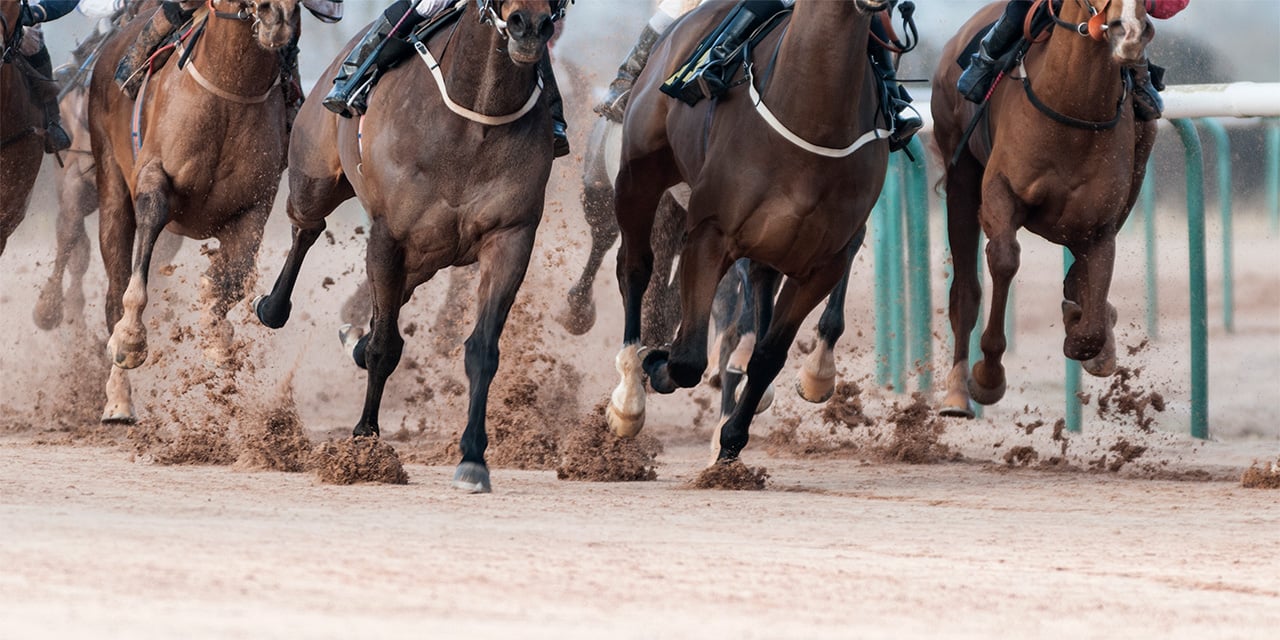
If bourbon is Kentucky's signature flavor, horse racing is its signature spectacle. Though the Commonwealth's economy is far more diverse than many might realize, Kentucky’s global identity remains inseparable from its two iconic exports: bourbon whiskey and thoroughbred racing.
Yet for all their tradition and well-earned place in the national lexicon, both industries find themselves at a crossroads.
Just as bourbon producers grapple with shifting consumer preferences and declining alcohol consumption among younger generations, horse racing faces growing competition from legalized sports betting and prediction markets. And while both industries’ legacies are assured, their future success will depend on their ability to attract the next generation of consumers and adapt to the structural changes facing nearly all businesses in the post-pandemic era.
Headwinds facing the industry
At a high level, betting on U.S. thoroughbred races has been under pressure for years as casual gamblers have increasingly gained access to alternatives. In 2025, U.S. thoroughbred wagering fell 2.1% to roughly $11.0 billion, while the number of race days was over 5% below prior year levels. A decline in purses paid echoed the drop in handle (i.e., the total amount of money wagered by all bettors combined), falling 2.5% to roughly $1.2 billion. At the same time, 2025 saw legal sports gambling revenues up 11% year-over-year to nearly $167 billion and prediction market trading up by over 300% to $64 billion.
All said, horse racing has to compete harder for attention in a crowded entertainment market, and its core customer base is aging in many parts of the country. Higher costs also cannot be ignored – the racing industry is a labor-intensive ecosystem of farms, barns, trainers, jockeys, veterinarians, farriers, and small businesses. Headline price inflation is already up 28% just over halfway through the decade, as compared to an 18% rise in total from 2010-2019.
There is also an omnipresent policy risk, as horse racing sits at the intersection of several heavily regulated areas that can materially impact the bottom line of the big players, either through increased competition from now-legalized gambling or higher costs of compliance with new rules. Structural challenges paired with cyclical headwinds make the racing industry operating environment a challenging one to say the least.
Kentucky’s advantage
There are tailwinds, as well. Kentucky is gaining share within a slower-growing national market, buoyed by world-class tracks, robust breeding infrastructure, booming tourism appeal and historical horse racing (HHR) revenue.
According to the Kentucky Thoroughbred Association, the broader equine industry generates about $6.5 billion in annual economic activity and supports more than 60,000 jobs in the state.
Through the first half of 2026, Kentucky’s handle was reportedly up 4.5%, while the rest of North American racing was down 6.6%. Kentucky-based venues Keeneland, Churchill Downs and Turfway Park are among the few outliers bucking the industry-wide slowdown, a positive sign that high-quality racing still attracts money when the product and venues are compelling.
Premier events are also still a draw. The 152nd Kentucky Derby in 2026 welcomed more than 150,000 attendees and reached an average of 19.6 million viewers across NBC and Peacock, making it the most-watched Derby since 1988. While wagering is slightly down overall, the full Derby week handle was $487 million, up 3% from 2025’s then-record $474 million.
Horse racing also stands to benefit from one of the most powerful tailwinds in today’s economy: consumers are increasingly prioritizing experiences over possessions. As spending shifts toward travel, live offerings and entertainment, marquee events like the Kentucky Derby are well positioned to capture a larger share of discretionary dollars, particularly among affluent consumers seeking premium experiences.
Consumers are still spending, but industries that want to benefit need to meet them where their interests are heading. Kentucky's racing industry reflects many of the longer-term economic trends seen elsewhere: rising costs and disruption to legacy industries, balanced by resilient affluent consumer spending, a growing preference for premium experiences and continued demand for travel and live events.
Like the stock market, the industry will not follow a straight line higher and will experience volatility. But it is backed by assets, branding and infrastructure that are difficult to replicate.
Great industries endure by adapting and innovating. Kentucky horse racing has survived and evolved for more than a century, and there is little reason to believe its next chapter will be any different.
Baird's Businesses
Baird’s financial advice and services include Private Wealth Management, Asset Management, Global Investment Banking, Capital Markets and Private Equity. Our clients include individuals, families, communities, small businesses and foundations across the United States, and corporations and institutional investors around the world.

With global resources and an unwavering commitment to your best interests, we're focused on helping you make smart decisions in all areas of your life.

We've helped schools, municipalities and other public organizations secure their financial futures in all kinds of markets for more than 100 years.

Our team emphasizes teamwork, sector expertise and client focus, creating a unique culture that sets our advisory and financing services apart.

Let us help you create your legacy through estate planning, trust and estate settlement services and investment management – so you can transfer your wealth to the people and causes you care about most.