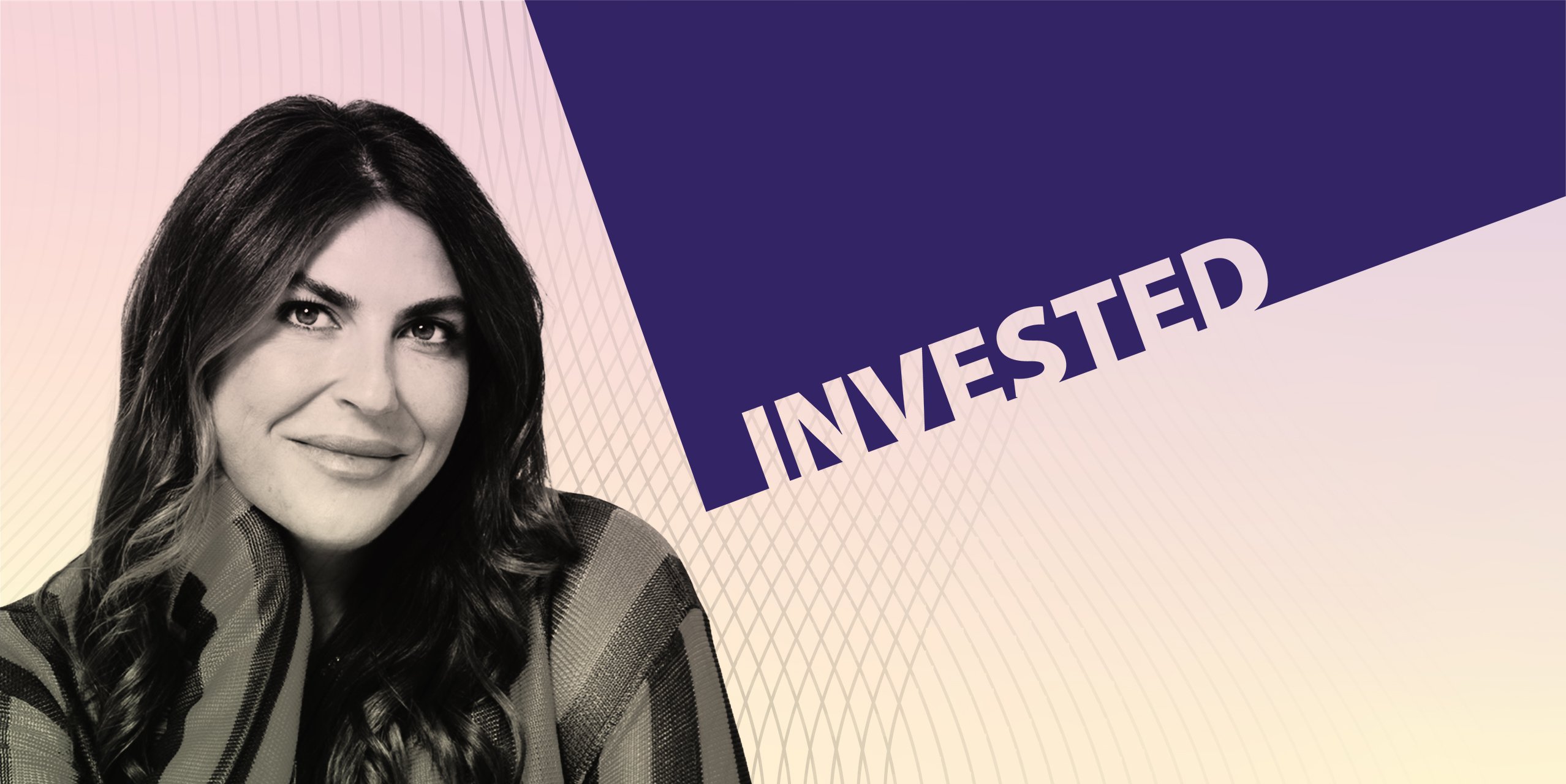
Take the Leap Earlier - Marcia Page
Invested Podcast | Season 2 Episode 4
Marcia Page, co‑founder of Värde Partners and founder of MPowered Capital, shares some of the defining lessons from her more than 30‑year career in finance, which highlights how sponsorship, confidence and self-aware leadership can create incredible opportunities.



In This Episode
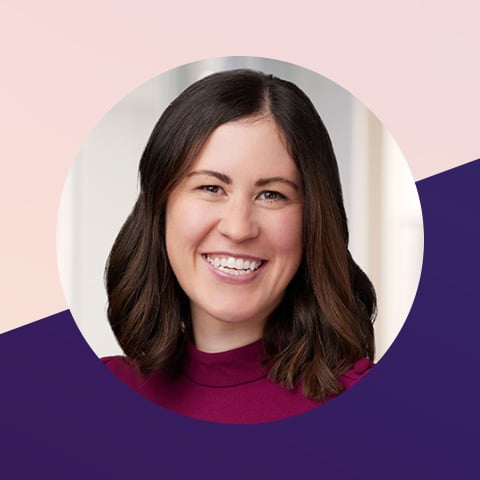
Sarah Gaul
Former Managing Director, Baird
Sarah Gaul was recently a Managing Director in Baird’s Global Investment Banking business. As a senior member of the firm’s Financial Sponsors Group (FSG), she provided advice and support to private equity firms.
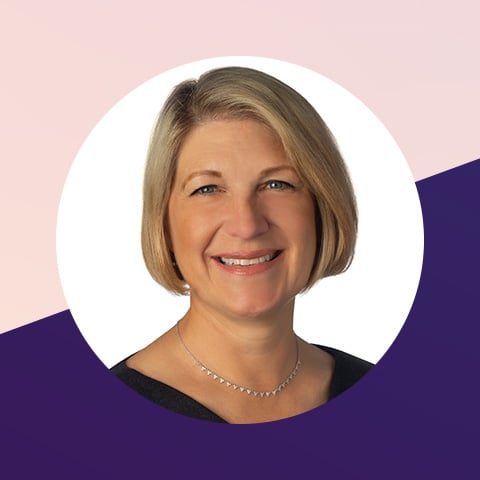
Marcia Page
Founder & CEO of MPowered Capital | Co-Founder & Chair Emerita of Värde Partners
With a successful 30-year track record of investing in market dislocation, Marcia Page has been a trailblazer in financial services, starting with co-founding and leading global alternative investment firm Värde Partners to more recently founding and running investment firm MPowered Capital.
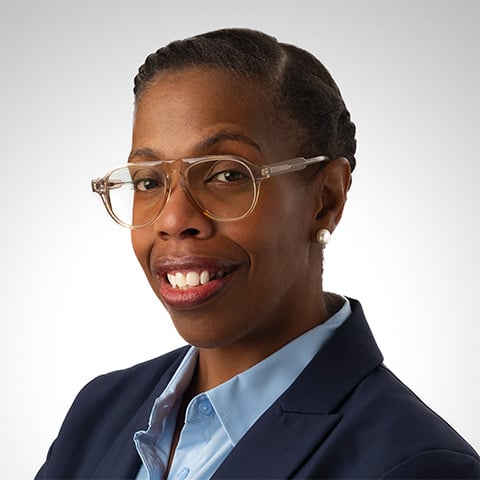
Moderator:
Angela Pittman Taylor
Director of Corporate Communications, Baird
As director of Corporate Communications, Angela oversees Baird’s global Public Relations and Internal Communications practice. Additionally, she leads Baird’s Chicago-area brand strategy and advises on the firm’s Inclusion & Diversity marketing strategy.
Transcript
-
Meet Our Guest, Marcia Page - Founder & CEO of MPowered Capital and Co-Founder and Chair Emerita of Värde Partners
Marcia Page
One of the things that I think has characterized so many of the moves from a career standpoint was my willingness to kind of leap at 60, 70, 80%, right? And have this confidence that I could figure the rest of it out. Women have a tendency, and this is data-driven, to wait until they've got 100% of those criteria satisfied. Whether it's for a promotion or to start a new business or to take a new role, being confident that you can figure out that other piece and take the leap a little earlier because your male colleagues are probably already doing that.
Angela Pittman Taylor
Welcome to Invested. We're hosting a mini-series on how to build and sustain fulfilling, engaging careers throughout the different seasons of life with bold and authentic choices. We're talking to several women about their stories in doing this, and we hope that listeners will find wisdom and inspiration. My co-host for this mini-series is Sarah Gaul, a Managing Director in our Global Investment Banking business. Welcome, Sarah.
Sarah Gaul
Hello. Hi. How are you, Angela?
Angela Pittman Taylor
I'm doing well. How are you doing?
Sarah Gaul
I am great. The sun is shining. Can't complain. And so excited for the conversation.
Angela Pittman Taylor
Yes, we have another wonderful guest lined up for today. So, Sarah, why don't you introduce her?
Sarah Gaul
Absolutely. So our guest today is Marcia Page, who has had truly such a remarkable career. She co-founded a global alternative asset firm, Värde Partners, in the early 90s, which was a bold move for a ton of reasons, which I'm looking forward to getting into. She led that firm for the better part of two decades. And then a few years ago, she decided to continue blazing trails. And this time she founded MPowered Capital, which provides capital to emerging investment managers. Her 30-plus year career is just chock full of examples of innovation and leadership. And so we are just absolutely thrilled. and privileged to be able to chat with her. So welcome, Marcia.
Marcia Page
Thank you so very much, Angela and Sarah. I'm looking forward to the conversation.
Sarah Gaul
Awesome. Okay. So, there's so much to cover. Let's go back to the very, very beginning. So, we'd love to know what initially drew you to financial services Was that sort of always the path? Let's go back to childhood. Tell us about it.
-
How did Marcia Page Get Started in Financial Services?
Marcia Page
Thank you for that. So, the answer is no, it did not start in my childhood. In fact, I would say my path to financial services would be considered very non-traditional. I grew up in a small town, so I had very little exposure or, quite honestly, understanding of the financial services industry. I grew up working side-by-side with my dad in his drugstore. So, when I left for college, I was going to become a pharmacist. That was the plan. And I was going to go back and work with my dad in Olivia, Minnesota. When I got to Gustavus Adolphus College as a freshman, second semester, I ran into, like, I call it a wrestling match with organic chemistry, which – I know, right? I lost badly. I really didn't actually understand anything that was happening, and I couldn't relate to it or understand how it related to business, quite honestly. And about the same time, I took a math of finance class. It was offered in the math department. And it was the mathematics around acceleration math, present value, future value, internal rates of return. And it came easily to me. I understood it. I could imagine how it could relate to business, to investing, but even to personal decisions. I got hooked on finance basically in my sophomore year of college.
When I graduated from Gustavus, it was a really rough economic period, very high employment, high inflation. And while it might be difficult to do that today, I went directly from my undergraduate to get an MBA at the University of Minnesota that was focused in finance. My first job was as a financial analyst at the large agriculture, amongst other things, firm Cargill in the Minneapolis area. And I was analyzing for various business segments and doing a lot of project-oriented work.
And about two years into my role as a financial analyst, as a basic corporate financial analyst, the person who was involved in my hiring, and mind you, he was several levels higher than I was in the organization, called me on a Friday afternoon and said, “Hey, do you know what a high-yield bond is?” And I tussled with the question a little bit because the real answer is I didn't actually know what a high-yield bond was. So I took what was then a stack of paper, brought it home, powered through it 24-7 over the weekend, came in Monday morning, described the situation, and he, together with other colleagues, went out on my recommendation and bought $5 million of high-yield bonds. And I guess from that point on, the rest is really history. So, it's a long way of answering the question about what drew me to financial services. It wasn't a planned path. It was an outcome of a series of opportunities would be the better way I'd characterize it.
Sarah Gaul
Oh, that's super interesting. Well, the rest of the podcast was going to be centered on organic chem, so I guess we'll pivot.
Marcia Page
We will talk about that.
Sarah Gaul
So, okay, continuing to sort of pull on that Cargill thread, I mean, think back to those early years, which sound really formative. I mean, what are one or two kind of early career experiences that you feel kind of shaped the trajectory that we're going to get into here shortly?
Marcia Page
Yeah, absolutely. I've reflected on this a lot now, right? I mean, years later as to what were some of those really fundamental sources of support. And I have centered on two pieces. One is sponsorship, and the other was the ability to commit capital very early in my career. Both of those things came together very early. So, I described the person who put that stack of paper on that high-yield bond project in front of me. His name was Bob Lumpkins. And again, he was involved in my hiring, but with the benefit of hindsight, I now know that he was a real sponsor to me. And I use that language very intentionally, as aside from a mentor, because he was putting chits on me all the time. He was making sure I had visibility to senior leadership at Cargill, and that I had interesting projects of increasing complexity, pushing me from a career standpoint in a very positive way. He also provided a lot of feedback, some of which literally brought me to tears. So it was an authentic sponsorship role, but he really helped me develop my confidence and really stretched my abilities.
After that high-yield bond analysis, I moved over to what was really a trading desk. And they had brought these, in effect, merchants of grain, corn and bean traders and said, “Hey, you're really good at cash and options and relative value and arbitrage and futures. Bring those skills over to financial instruments.” And in effect, I was on this desk with all of these phenomenal merchants learning that had global experience and really learned from the best. And the other thing I will say, it was incredibly entrepreneurial. And how did they let somebody my age basically commit capital is almost beyond my – it's kind of crazy to reflect back on it. But it was that combination of sponsorship and being able to commit capital early in my career that was a real game changer for me personally.
-
The power of sponsorship vs. mentorship
Sarah Gaul
It's super interesting. And I love sort of how you talk about sponsorship and there's that distinction between sponsorship and mentorship. And I think of, you know, these are the people who not only will give you the opportunity, but they're going to talk about you and champion you when you're not in the room. How do you sort of build that sponsorship and that amount of opportunity that you were able to get in those early years of your career?
Marcia Page
I would say I was the beneficiary of Bob's identifying that I had potential and him really taking ownership of that. As I mentioned, when I look back with the benefit of hindsight, I didn't realize I had a sponsor. It was only with the benefit of time and a level of appreciation for what it meant to me that I understood it, and probably understanding the power of sponsorship generally.
So, we know, for instance, that an individual that sponsored is twice as likely to be promoted. And women particularly tend to be under-sponsored and over-mentored. So, one of the challenges is how do you achieve that spot? Most women have phenomenal mentors, but how do you achieve that sponsorship? And I think I was a beneficiary of kind of a one-way sponsorship, but recognizing the difference and looking for those people in the organization that can take that and own that is really important. When we were at Värde for a period of time, we actually assigned sponsors as one way to help mitigate some of the structural challenges around that lack of sponsorship for women.
-
How Marcia Page Co-Founded Värde Partners
Sarah Gaul
Oh, that's super interesting. So now let's sort of cross the bridge into Värde and how that came to be. You co-founded the firm with some former colleagues, right? Really, you're very entrepreneurial. I mean, tell us how you thought, you know, now it's time that I sort of start my own firm.
Marcia Page
Yeah, no, I appreciate that. I think the first piece is that I'd already taken the leap once. One thing that gets kind of lost in the narrative a little bit is that between Cargill and founding Värde, I joined a startup hedge fund, the three principals of which had also been in that Cargill Financial Services Group. So I basically, for the benefit, for the full five years, had been investing. I was contemplating doing something more independently. I'd already, in effect, taken the leap once, right? So that had created quite a bit of confidence, I think, and conviction.
And then the other part was in effect, and you've identified it right, Sarah, I reconnected with George Hicks and Greg McMillan, with whom I'd previously worked at Cargill as well. And we were all at about the same time really contemplating doing something new and entrepreneurial, almost independently of each other, and reconnected and identified an idea that at the time, and the market was relatively novel. And that was the idea of, in effect, creating a fund that could commit capital, primarily at this time, to distressed and underperforming transactions, but from liquid traded situations to illiquid strategies in one fund. I think one of the other pieces that I'm grateful for, and again, I think we aligned on it very early on, this idea that we'd be stronger together. We were also very aligned on looking to have a culture that was very much talent- and performance-driven. And we were very aligned from, I would say, kind of the basic fundamental values that we brought together.
Sarah Gaul
I'll ask this question, and I'm being serious. Was it hard? I mean, this is, you know, 1993, you're starting in what is an evolving market in and of itself. You'd already had experience at the hedge fund that you cited, but take us back to those early days of founding a firm and what that felt like. And I mean, you identified wonderful partners, but what was that like? I imagine it was hard.
Marcia Page
Well, you go in with confidence, right? We had this, what we believed were really unique skill sets that were in demand, right, in an emerging part of the financial services industry. But what we underestimated, I think, collectively, was the challenges around the non-investing sides of the business, particularly fund raising. They don't see a brand and they're not sure about the performance track record, right? Because you're basically a startup. By June of 1994, we'd been working together and fundraising for about six months. And we finally said, we're just going to get started. Let's get the performance started. We started with $4 million, and finally just took the plunge and started making our first investments.
It took us 10 years to get to $1 billion dollars in assets under management. Then the next 10 years, we went from $1 to $10 billion in assets under management, right? I mean, this is the challenge and the opportunity that's embedded in this business. At the same time, we went through all of our savings while we waited to get to break even, right, over. And I still remember that first paycheck, it came about three years in after most of our savings were depleted. And I can tell you, because I've got it saved somewhere in my archives, that check is just slightly over $1,000. So yeah, yes, it was challenging, no question about it.
-
Transformative Moments at Värde Partners
Sarah Gaul
Yeah, that's such interesting perspective. Thank you for sharing that. So As you think back over 20-plus years at Värde Partners, are there specific, really transformative experiences? You just talked about sort of fund raising, that sort of whole experience. But as you think over your career there, what were some other sort of very transformative experiences, both personally and professionally?
Marcia Page
A couple of things are just really... phenomenal that kind of fit that characterization or the buckets of both personal and professional and they are, highlight experiences. I would say one was a highlight and one was more of a lowlight, but that where I learned A lot. The highlight really was moving our family to London to help establish Värde’s non-U.S. presence. So now it's really 2005 and it's May and George Hicks, we've already been investing in non-U.S. situations, but we'd really been doing it from Minneapolis and from the United States. So now it's May of 2005, and George is like, why don't you go over there and really help fundamentally build that business, get the talent set up, and really let's go after this. But it was a family decision, and it was absolutely phenomenal from both the professional growth and experience and being able to operate in a global environment. And as a family, we basically traveled all over Europe during that period of time. It was extraordinary and really a phenomenal, phenomenal period. So, I put that in like one of the biggest highlights.
Now, fast forward, it's 2011. We have made huge strides in that intervening period to develop our European presence. That second half of the year was just an unbelievably stressful period of time. At the same time, I'd been together with my partners, fund raising globally for the better part of two years. And I literally got to the end of 2011, and I was literally exhausted. I just felt professionally beaten up. And it was my mom at the time who said, “Hey, I've got an idea. Maybe you could use a coach.” I hired a coach who interviewed about 15 individuals, most of whom were colleagues, but it also included a couple of friends and some family members, and about a month later sat down with me and read the responses verbatim to me. Sorry, I still get a little emotional talking about it. It was humbling and eye-opening. There was some really positive feedback.
And what I think I learned from that in a way was that I really had underestimated my influence. And so that was an eye-opening part of it. And then there was a real kick in the [sic] part of the feedback, which was that my colleagues really wanted me to show stronger leadership across the entire firm and leverage my time better, to better focus my time, leverage it, and to continue to think bigger. I took those lessons very, very seriously. So it's very much been a long-term lesson for me in leadership and self-awareness. And this idea that as self-aware as we might believe that we are, we are mostly judged from our colleagues by what we do, by what we say, by what we don't do and what we don't say. And that we need that external and internal mirror to make sure that we are kind of staying grounded in what we're doing and the kind of leadership we're providing.
Sarah Gaul
I love that story. That's so powerful because I was going to say, you seem like such a self-aware leader. And so that, I mean, what, such an incredible exercise. And I imagine, because I wanted to ask you about, I think you built such a strong culture at Värde. And obviously that started at the beginning. You said you and your partners were sort of so in sync with kind of the goals of the firm, but that is easier said than done, right? And so how do you build such a culture and then how sort of your career evolved. And then, you know, of course, we'll get more into empowered capital, but what did that look like of building such a unique culture?
Marcia Page
Yeah, no, I really appreciate that. And I will just say, yes, we started very aligned, but we did some early things. For example, we named the firm Värde. We didn't name it George, Gregg and Marcia. So, part of it was very intentionally avoiding what can often be a cult of personality in this business. So, there were some, I would say, early decisions that were very intentional. We didn't, though, say this is what the culture is going to be. What I believe when I look back on the culture of the firms, whether it's Värde or MPpowered Capital, is it actually evolved from really thoughtful hiring decisions.
And so I call myself a talent snob. I don't know how that language translates for everybody, but it was really this idea of being very thoughtful around our hiring and making sure we found best-in-class talent, that we identified them on criteria for the role, and that we provided the right kind of expectations as an organization around performance. And when I think about it, bringing people into that organization one by one by one that had those characteristics, ultimately, collectively and organically, I think created a culture that was one, collective intelligence, working together, not a star culture or a star personality, and where people really understood that talent and performance and being good fiduciaries to our investors were the, you know, fundamentals around the business.
-
The Origin Story of MPowered Capital
Sarah Gaul
That's so helpful. And I imagine that, I mean, clearly you're so passionate about culture, you're passionate about talent, you're passionate about diversity. So then tell us more about sort of how MPpowered Capital came to be.
Marcia Page
MPowered Capital kind of came through a series of moments or observations. And it really started about 10 years ago when I moved from the co-CEO and co-CIO role at Värde. And what stood out to me very quickly was, first of all, so many of the talented people with whom I'd worked, particularly at Cargill, were no longer in the business. And that was both a little surprising and a little bit unsettling. And then as I looked more closely, it became clear that there was a real gap between, call it talent or ability, and that access to capital, particularly for emerging managers, even more specifically for women and other diverse talent.
I'm also kind of a data and research wonk. So, then I started deepening my understanding and digging into the data, and then the disconnect became even more striking to me. So, despite even strong track records, emerging managers, and especially female and other diverse firms, were consistently underrepresented in fundraising. A mere 1.4% of $82 trillion U.S. institutionally run assets are managed by female- and other diverse-owned firms. Sarah, I see you responding to that number. It's 1.4%. Wow. Having kind of grown up with the methodology of identifying capital dislocations, I mean, that's been my MO for all of these years from an investing standpoint, this struck me as one of the biggest, call it capital dislocations that I'd seen in my career. And in capital dislocations are opportunity, right?
So, I really at the end of the day saw it as a really interesting investment opportunity. And that's really the origin story of MPowered Capital. So, we used the insights from that research. We also surveyed fund managers or those that maybe were thinking about being fund managers and identified some of the key challenges, some of the key barriers to going through the process of your own firm and fund formation.
Sarah Gaul
There's so much discussion around inclusion and diversity and sort of buzzwords that people sort of throw around. I love that you are so rooted in data when you make decisions. And have you been able to see sort of differentiated outcomes from your investing or I would just be curious sort of what that, what sort of the data and the returns have presented?
Marcia Page
It's exactly the right question, right? And the reality is that emerging managers tend to outperform their benchmark peers, which is what makes the capital flow point that much more striking, right, is that the capital isn't flowing to the areas where you have identified performance over long periods of time. I'm citing that as kind of a high-level point because it's really the fundamental piece, but there's multiple sources of research that support that underperformance, or excuse me, that overperformance against benchmark peers.
Sarah Gaul
I assumed that was going to be the answer. I really didn't know the answer, but I just assumed that people are so skeptical and you're saying, here's the proof point. I mean, how do we help others to see like these proactive efforts are necessary?
Marcia Page
One of the challenges over the last, and really this has been since the global financial crisis, is that structurally the alternatives market has been fueled by the large firms growing at a disproportionately faster rate. So, part of what's happened to, you know, has been really structural in nature as investors have sought fewer relationships and more dollars have gone to the larger firms. So part of what I do when I'm having this conversation is I acknowledge there are some really structural things that are happening in alternatives generally that have changed the shape of how capital moves to that emerging manager segment anyway. Okay, so you've got that as one aspect. But when people question, the proactive efforts just generally around gender inclusion, I – you're right, I default to the data. I think about it at the micro, which is how we think about it in our own organizations and how we mitigate bias through our talent management processes. And that's a conversation for a whole other day.
And then I think about it even on a global basis. So if you look at the World Economic Forum, they do an annual global gender gap report. They've been following 100 countries for the better part of 20 years. And last year, that gap was identified at 69%. It's a smidge higher than it was a year ago. It's about five points, just under five points higher than it was when they started this about 20 years ago. So we would acknowledge it's improving, but it's improving at a really slow rate. To get to gender parity at this rate, it'll take over 100 years. I don't think my grandchildren will see it. But in financial services, we know that women are promoted more slowly, and it starts at the very first rung. They're paid less for the same work, and they are, and this goes back to earlier in our conversation, much less likely to receive sponsorship like I received with Bob Lumpkins. And this goes to the point that they're promoted generally more slowly without that sponsorship.
So, when I really come back, I come back to this not being a fairness conversation, but one really about performance and risk. And when you have organizations that are prioritizing talent performance against stated criteria, performance and promotions, that’s what determines who rises in that organization. You just have better decisions and stronger leadership benches. So, at the end of the day, I kind of flip this from the idea of this being an unfair advantage to one where we're looking to maximize organizational performance. Yes. And create a culture where people are excited to come to work, honestly.
Sarah Gaul
I love that. Should I snap? Should I applaud? I just, that's, Marcia, that is so awesome. And what I love, I think I have this right, that you were so convicted in this idea, obviously, through your whole career, but with MPowered, that was your personal capital first, right?
Marcia Page
Yes, thank you very much. So the conviction lay in the idea, in the concept of the opportunity for superior risk-adjusted returns by virtue of this group of talent outperforming their benchmark peers and bringing capital into a gap that was clearly identified. And then yes, I like, you know, put all the chips in. So I've personally committed $75 million to this effort over what will be multiple funds. It's very exciting and I'm very convicted.
Sarah Gaul
That is so awesome. I have chills. I love it. And you had said sort of part of the, I guess I'll say barriers to entry was the fund raising, which obviously, you know, personally is such a, I mean, you referenced that as such sort of an unexpected challenge. So obviously the fundraising piece, you know, MPowered Capital is of course helping there. But then you mentioned there are some other sort of more administrative barriers to entry. Are you providing at MPowered Capital more than just capital, which is obviously incredible, but are there other sort of pieces of support?
Marcia Page
So, let's start with the type of talent that's looking to begin their own firm, right? They're already very, very experienced. It's really exceptional talent. So we're already starting with excellent investors with incredible pedigrees and a lot of experience. What happens when you're now going to begin the process of firm and fund formation, you may or may not have been exposed to the non-investing sides of the business, right? So the way we've thought about this at MPowered Capital is really bringing together the sources of capital that help that firm launch. Get their team in place, get all of those component pieces in place so that they can be institutionally ready and be in the quality conversation from a fund raising standpoint with all of the pieces in place. Actually, at the end of the day, it's precisely what I received early in my career.
-
How to find and cultivate a sponsor in your career
Angela Pittman Taylor
A lot of this is resonating with me. All of it is. One thing that I wanted to just ask at this point, because we've been talking about sponsorship and women being, I've heard it before and I love that you said it, women being over-mentored and under-sponsored. So as women are, who are listening to this episode are inspired around like trying to figure out like, “Do I have a sponsor? How do I encounter a sponsor?” What does that look like? And your own description of, you know, not even really knowing except in hindsight, what was happening for you. What advice would you have for women today who are thinking about sponsorship and how to go about securing it or figuring out, who could be a sponsor for me?
Marcia Page
I think it's a tricky question, right? Because I think you can have a little bit of a cart and a horse problem depending on the individuals. But one way I've counseled people to think about this is, and of course, I've used this language where you have a mentor on one end and a sponsor on the other end. But what if you thought of it more like a continuum, right? So that you're mentored, but now as you move along that continuum for the next project, it's more complex, it has higher visibility in the organization, and you break it a bit into pieces and you start to build that relationship with that individual or individuals. That ultimately gets you closer to the end of the spectrum of being a sponsor. You break it a little bit into pieces rather than thinking about it as an either-or. It's not perfect. It's just not that easy necessarily to get all those pieces in place. Right? But if you kind of break it down into pieces and think about ways that you can step into that with an individual and start to take some increasingly visible, complex projects and run with them in addition to probably the other things you're doing, but that fundamentally advance your career and your credibility in the organization. That would be my kind of like midway counsel.
Sarah Gaul
I think that's very well said because I think it's about being strategic. I think that's what you're saying, right? There, you need to have some strategy around it and it can be very authentic and strategic. And you just need to think about, you know, a mentor and a sponsor could be the same person, but they might be different. And I think a sponsor is someone who has influence. And I said this before, that they are your champion in rooms that you're not in yet. And I think when you're strategic to you know, show that you're working hard, you're great at your job, getting those more sort of complex projects, doing those well and authentically gaining visibility, then I think that sponsorship does then feel more organic. But I think you need to be strategic.
Marcia Page
Yeah, I really like the way you say it. And then the table stakes are that you're doing your work well. Exactly. It has to be done well. So there are table stakes, I think, to beginning getting into those conversations, those strategic conversations, as well.
Angela Pittman Taylor
Yes, and something you said earlier, Sarah, you alluded to, it's not luck that, Marcia, you built this career over time and that people noticed and invested in you to bring you to where you are today to help smooth the path to where you are today. But you put in a lot of that work yourself, that whole idea of luck really being that intersection of opportunity and preparation and just knowing that you're working very hard and also recognizing the opportunity to move forward and really show that to someone who has the influence, to your point, to open doors.
Marcia Page
Absolutely. Well said. One of the pieces of feedback that Bob Lumpkins gave me really early on that were probably the source of my tears is that he told me that I had shown up to a meeting unprepared. Oh, yeah. So going to the point of our table stakes.
Sarah Gaul
That one cuts deep. Yeah.
Marcia Page
It cut deep. It cut deep. I was like, I was like, “Oh, I can punt this. I can figure it out on the go.” I tend to be an over-preparer now.
-
Integrating career and family
Sarah Gaul
Yep, lesson learned. Okay, so speaking of working hard, we've talked about this incredible career. You are also a wife, a mom. I mean, tell us about sort of integrating the personal and professional. I love when you talked about the move to London. That was a family decision. But tell us about managing everything.
Marcia Page
I would say it wouldn't be the definition of balance. So I've been more of the view that it's a teeter-totter and things are moving around. But no question, my husband and I have had the joy of raising three daughters. They're now all functioning adults. And while advancing the career, starting new businesses was obviously really demanding. There's hard work on the work front. There's hard work on the family front. You learn to be adaptable. You're very resilient. And honestly, you have to have a sense of humor. So the joke I'd say to the girls almost every day is, “One dropped ball a day is a very good day.” So we're doing just fine. It's not about perfection.
And of course, I was very fortunate to have a lot of support from my husband, John. He shared the duties, he supported my work, all these all these years. When I founded MPowered, because it kind of started as a research project and turned into a business, he said, “Did you just start another business?” It just kind of happened, but stick with me on this. And I think it's important to acknowledge that we really were fortunate to have good health as well. So, we had a lot of really strong fundamentals that were supportive of all of this along the way. But I fail if I didn't acknowledge the amazing colleagues, deep friendships and other family members who were just an incredible deep wall of support. And when the going got really tough, you just kind of true up to your values and make sure that you're being consistent in the way you're approaching your work at home and your, you know, your career as well. The one thing I would say to perhaps people who are listening who have younger children than I do, there were moments where I'm like, “This is falling apart. Like, they're not even answering my questions.” You know, think about middle school girls, you know. So, when I look back with the benefit of hindsight, they were absolutely paying attention. You are a role model. They are aspiring and inspired by you when the dust ultimately settles. So, they've got very big antennae, even if it doesn't appear that they're paying attention, watching or caring. They actually really are.
Sarah Gaul
That's extremely encouraging, I think, probably for both Angela and I who have kids. And I feel like daily, I'm like, “This might be falling apart.” So that's very encouraging. I think it's easy for us to look at your amazing career and think it was always up and to the right, just always. And careers are not linear. And again, I appreciate you saying there are days where sort of it was falling apart. I mean, has your definition of success, as you sort of look back at your career.. did it change over time? How do you think about that?
Marcia Page
A little bit yes and no. I think the area where I would say it hasn't changed, and I credit, again, Cargill really starting this, is this idea of being a good fiduciary. So, the language was, your word is your bond. If you're going to commit to something, you do it, and there's no turning back. And similarly, as you are in the investment management business, operating as a fiduciary and remembering that your investors are ultimately, you know, who you're there to serve and the performance and nature of what you're doing as a business is ultimately to fulfill that duty. And then I think as time goes by, you know, you, and again, it goes a little bit back to that feedback, those feedback lessons, you realize that a lot of people are watching. And they are looking to you for leadership across the firm more broadly. And so it naturally becomes less about your individual contribution and outcomes and much more about providing judgment and thinking about how you're building a business that can sustain itself and have the staying power and have long-term impact. So, for sure, it progresses over time. Most of what I'm doing is very deeply connected to purpose. So, it's a fun trajectory. And you're right, it's not up and to the right. It's a lot of –
Angela Pittman Taylor
Ups and downs along the way. Right.
Marcia Page
But hopefully next up is a little bit higher than the previous up.
Sarah Gaul
Well said. I love you to remember that daily.
-
Why you should take the leap before you’re totally ready
Angela Pittman Taylor
One of the other things that I'm just chewing on as you're talking, Marcia, is the feedback that you received that was really, we want you to take up more space. We want you to be bigger and take up more space. And that as a leader really resonates with me very much. I'm curious about your perspective about being a woman and the expectations of women in leadership and kind of the juxtaposition of that, because I think that there's something very powerful in that message around taking up space. Did it surprise you that was part of the feedback? And was there ever any component of your whole entire career and leadership journey where some of these societal expectations or stereotypical expectations of women, that was part of what you also had to address.
Marcia Page
Oh, what a really interesting question, Angela. Let me see if I can tackle that. One of the things that I reflect on is I think growing up with my parents and having a sponsor early in my career gave me a lot of confidence, right? So And one of the things that I think has characterized so many of the moves from a career standpoint was my willingness to kind of leap at 60, 70, 80%, right, and have this confidence that I could figure the rest of it out. And I bring this up partly because women have a tendency, and this is data-driven, to wait until they've got 100% of those criteria satisfied, whether it's for a promotion or to start a new business or to take a new role, right? And so it's not a direct answer to your, it's an indirect answer to your question, Angela, which is being confident that you can figure out that other piece and take the leap a little earlier because your male colleagues are probably already doing that. And I don't know if that directly goes to the space piece, but leadership, but it's really about keeping your head up, willing to take some of those risks. I call 'em risks, but it's really a leap that you can figure out some of this as you go.
Sarah Gaul
I love that advice because particularly as sort of a planner and an over-preparer, sort of thinking like, “I'm most of the way there, I can sort of figure the rest out,” is such good advice. And I feel like there's like some insane stat that's like the vast majority of men in the United States think that they could like capably be the president tomorrow or something. Like just the confidence, like just have that level of confidence is great advice.
Marcia Page
Well, it's a reminder why, for instance, when we mitigate bias in the promotion process, we've taken off self-ratings because women self-rate lower than men, really going precisely back to your point, Sarah. So, all of these pieces kind of tie together in, having that fundamental understanding about ourselves and pushing, pressing just a little bit.
-
How to connect with Marcia Page
Sarah Gaul
Awesome. Awesome. Okay, as we wrap up our conversation, where can our listeners hear more from you, Marcia? Are you on social media? How can they connect with you further?
Marcia Page
Yeah, absolutely. Connect on LinkedIn under Marcia Page. And of course, MPowered also has a LinkedIn page and the company website. And we, you know, welcome your inquiries and feedback.
Angela Pittman Taylor
Wonderful. Thank you so much for joining us today. We really enjoyed this conversation.
Marcia Page
Oh, thank you. I feel the same way. It was absolutely delightful. And thank you for your leadership.
The information offered is for informational purposes only and should not be regarded as information or advice sufficient on which to make a financial decision. Baird is not a legal or tax services provider and you are strongly encouraged to seek the advice of the appropriate professional advisors before taking any action.
All investments have some level of risk and this should not be considered a recommendation of any products or services discussed today. The opinions are those of the guest and not necessarily those of Baird. The information is from sources regarded as credible, but Baird has not verified the accuracy.
Baird Financial Corporation is a limited partner investor in MPowered Capital’s MPowered Access Fund I.
Robert W. Baird & Co. Incorporated. Member SIPC. All rights reserved.
- Topics:
- Pursuing Dynamic Careers