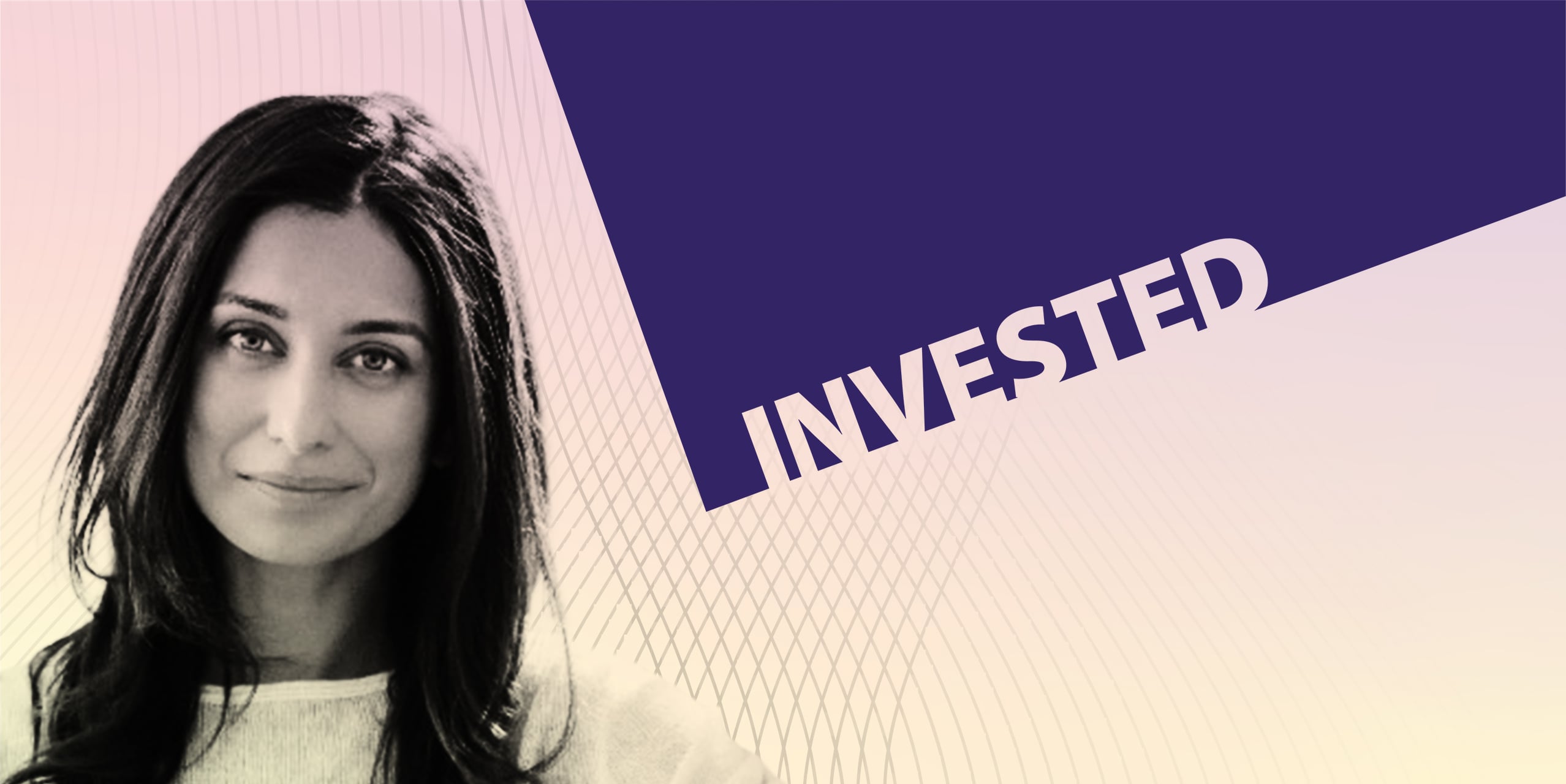
Redefining Ambition Through the Power Pause - Neha Ruch
Invested Podcast | Season 2 Episode 2
Author and founder Neha Ruch joins Invested to share her unique career story, which challenges the conventional definitions of stay-at-home motherhood, ambition and success and illustrates how redefining priorities can open the door to more fulfilling careers chapters across the different seasons of life.



In This Episode

Sarah Gaul
Managing Director, Baird
Sarah Gaul is a Managing Director in Baird’s Global Investment Banking business. As a senior member of the firm’s Financial Sponsors Group (FSG), she provides advice and support to private equity firms.

Neha Ruch
Author & Founder, THE POWER PAUSE
Redefining career breaks for ambitious women, Neha Ruch is the author of THE POWER PAUSE and the founder of a platform of the same name (formerly Mother Untitled), the leading platform for helping women embrace career pauses to focus on family with intention.

Moderator:
Angela Pittman Taylor
Director of Corporate Communications, Baird
As director of Corporate Communications, Angela oversees Baird’s global Public Relations and Internal Communications practice. Additionally, she leads Baird’s Chicago-area brand strategy and advises on the firm’s Inclusion & Diversity marketing strategy.
Transcript
-
Meet Neha Ruch, Author of The Power Pause
Angela Pittman Taylor
Welcome to Invested. We're hosting a mini-series on how to build and sustain fulfilling, engaging careers throughout the different seasons of life with bold and authentic choices. We're talking to several women about their stories in doing this, and we hope listeners will find wisdom and inspiration. My co-host for this miniseries is Sarah Gaul, a Managing Director in our Global Investment Banking business. Sarah, welcome. How are you doing?
Sarah Gaul
I am good. I have finally thawed out from my commute into the office. It is, I think, officially negative 1,000 degrees in Chicago. So, I am really, really looking forward to this conversation, and we are so lucky to have our guest here today.
Angela Pittman Taylor
Absolutely. So, why don't you go ahead and introduce her?
Sarah Gaul
I would love to. Our guest today is Neha Ruch, who founded a business and wrote a best-selling book on the concept of taking a career pause, a power pause, as it were. Neha herself took a power pause from a fast-paced career to spend more time with her family. And in the book, she explores how a power pause of this kind can be intentional, strategic and extremely fulfilling in so many ways. Her story and really, all of her work, is such an incredible example of pursuing a dynamic career. So, we are so thrilled to have her today. Welcome, Neha.
Neha Ruch
That's so kind. And I can't tell you how grateful I am to have this conversation for multiple reasons, one of which is it got me out of sledding on the snow day that is happening in New York. My husband is out with three children right now, and I'm nice and warm and cozy with you, too. So, thank you. Perfect.
-
Neha shares her early career and background story
Sarah Gaul
Perfect. Well, that sounds great. So, there is so much to unpack, Neha, and so let's start at the very beginning, right? That's probably a good place to go. Rewind – you established a big, fast-paced career pretty early on. So, just set the scene for us. Tell us about your early career, the evolution, and kind of set the stage for us.
Neha Ruch
I'm so glad you started with my early career because, you know, there's a number of 20-somethings who will show up sometimes at book talks and events and say, “Would you do anything differently?” I always say, “Absolutely not.” I loved my career. I really did. And I still love it, but I loved that stage of it because it was my main priority, you know, and I, and I think I had that capacity and I gave it everything.
I was lucky enough. I'd always thought I was going to be a journalist, but I ended up doing a sharp pivot into social media strategy in 2006. So imagine – Twitter was nascent, Instagram wasn't there yet. I got very lucky being 22 at an agency that was specializing in social media. And they said, “Well, you're 22, you can take this over.” And so it allowed me to climb pretty quickly. And so I ultimately was moved into a larger agency as the second hire of the new digital strategy wing. And we built that practice to 100 people. I ran all of the women's focused accounts, both in pharma and in retail. And it was really centered on how do we understand millennial women, ironically, and how they use social media to connect and to learn and how can we as brands do a better job using it? And it was such fun. It really was. And then I think it was around 27, I was around 27. So, I'd probably put in like five years at that point when I thought, “Something's not 100%, I'm too young to be in the rooms I'm in and the politics have sort of outpaced my capacity.” And I was sort of caught up in it. I decided to go to business school, which is sort of a unique choice in your twenties in advertising. After that I ended up at a startup in tech running brand, which was my last formal professional title before I had my first child.
Sarah Gaul
That's super interesting. So peppered throughout your book, which, by the way, Angela and I both just devoured. It was so good. And you just talked about some of the elements that you loved about your career and what you were building and going to Stanford and just, you know, you're checking all the boxes, right, that, you know, we're sort of supposed to, if you will. There are things you loved, there are clearly things you didn't love. So, I mean, sort of tell us about that.
Neha Ruch
You know, it's funny how the things I loved, I was able to bring with me, right? But I do think that we get to bring parts of what we do with us as we evolve, whether you evolve into another role or you evolve into a career and then motherhood and then, and then, and then, and then. I think that if I were to look back on the things that I found challenging, both before business school and after, you know, the irony when I left business school, I left for a tech startup. But, you know, the thing that I that I brought with me was this love of storytelling and how to sort of piece together millennial women's new experiences and figure out how we were doing things differently, in this case, weddings. But the thing that followed me was politics. You know, you don't get to escape that. And I think I had thought that I was going to go from agency with a lot of people to start up and somehow it was going to be devoid of this thing. And the reality is it's same circus, different clowns, right?
I think as you grow up, you learn how to navigate politics. And politics are everywhere because in the end, politics is about advocating for your needs, understanding other people's needs, finding a middle ground. And at some point, experience helps you navigate that, right? And I ultimately found that experience in motherhood. And when I had my first son, you know, a few months later when I was considering sort of my next step and returning, I was rocking with him and I finally felt free of politics because the only needs I had to take care of were my own, my family's, and it all felt so clear and it felt like I wanted to rest in that for a little bit.
I did not fully pause. I downshifted to a part-time role first two days a week. And then when I had my second child, I paused fully. But I also share that story because I did not choose to downshift and then ultimately pause because I thought it was the right choice for motherhood and children. I really did it because I thought I would be better. There's so much research to say whether you work in the home or out of the home or exist in the between, your child – there are happy and healthy outcomes for all children as long as the parent is happy and healthy. And so that was really important to me.
-
How did Neha make the decision to downshift?
Sarah Gaul
That is. It's such a beautiful and courageous statement, actually, that you sort of say, you had this moment of clarity and it wasn't for your kids, it was for you. I think that's so special. And so you had this moment of clarity when your son was born. I do want to talk about sort of that evolution of your pause. It sounds like you had so much confidence in yourself. And so what did that sort of process look like, the downshift to a part-time role first? I imagine even that may have felt scary.
Neha Ruch
Mm-hmm. You know, it's interesting you say I 100% felt confident on the inside. I had yet to develop the chops to be able to handle other people's feedback. And that's something I think I certainly was able to build in motherhood because as you know, you will be challenged to make a series of decisions, whether you choose to breastfeed or bottle feed or co-sleep or cry it out or get a babysitter or a nanny or a daycare or you have your grandmother. Someone is going to say something about your decision no matter what, and you will exercise the decision. The ability, the muscle to make the right choice for you and your family and tune that out.
And that, by the way, is like a crucial part and perspective that helps you navigate politics later on, right? The ability to make the best right choice and take the right inputs and weed out the other inputs and keep moving forward. When I initially chose to downshift, I had a collaborator when I was at Zola, a media collaborator who offered me a two day a week. If there's a way to find a model for flexibility within your company, that's incredible. We negotiated me returning at five months and I went back two days a week. And I think to your point, there was a part of me that was excited to be able to have the rest of the week fully with my child and sort of the black and whiteness of that. I think there was another part of me that was really happy to have some earning power to be able to also, with my partner, be able to figure out what that felt like and looked like and be able to have some ongoing conversations about how we were going to adjust or shift to make room for this.
Angela Pittman Taylor
One of the things that I have noticed with individuals when they take a fractional – I love that term – role is you almost are putting more work in to make that work than if you were doing a full-time role. And I think that that's kind of an interesting thing that maybe people don't necessarily talk very much about. But to be successful at it, you really do have to kind of almost work harder, put in more effort to make it fit. Was that something that you experienced as you were going through that? Or did you find that to be more seamless for you?
Neha Ruch
I think there are different versions of flexible work. And I think that if you are part-time or, you know, in some law firms, for example, they'll say you're at 60% or, I think it can be really tricky in the services industry. So, I did not take a part-time role in an ad agency because I think when you're in client service and it's billable hours, that can get really – it's just very tricky.
I think in the sort of, in the position I was in, this was pre-COVID, right? It was 2016. So, it was in office and it was two days in office. And I think to your point, I gave it everything during those two days. I was not taking leisurely lunches during these two days, right? Because that role was so important and so valuable and so rare that I wanted them to feel they were getting everything. It was really – I was invested in making it work. And I think that when you get that position that values your time and affords you the ability to prioritize other things that are important to you, you want to make it work.
Sarah Gaul
So, it sort of sounds like this downshift was working for you and you were sort of able to sort of test out the pause to some extent. And so then when your daughter was born, that was sort of another downshift. Is that right?
Neha Ruch
Well, it's so interesting because so many people think, “Oh, career breaks happen as soon as you have your first child.” It's very commonly when you add a multiple because the logistics of childcare just become more complicated, right? I was navigating the downshift to part-time work and I was at home the rest of the week. I started hearing the initial traces of pushback of like, “Are you going to – are you bored? Are you bored all day with your child or? Do you feel like you're giving up? Do you feel like you missed the office? Or do you feel like you're going to lose your place? Are you wasting business school a little bit?” I mean, literally these were the things that were said from, by the way, very loving peers, family members out of a place of true confusion – you know, reconciling. This is a person who they perceived as being a force of ambition, who was enjoying very, you know, on the surface, slow days at home, and they could not process that.
Meanwhile, on my days at home, and I loved what you said in terms of, you know, I was testing out the pause because I was like – it wasn't just like, “Do I like consulting work?” It was like, “Am I okay at home? Like, do I – what's going to happen if I were to fully pause?” Right? And I was meeting incredible women just by nature of being on a playground and in a play space or in a music class who were, you know, everyone from someone in finance, someone in merchandising, someone in law, someone who were all making their own versions of making room for family. None of them matched the very outdated stereotype of the bored shut-in woman that I was hearing.
And at that time, it was still 2016. It was the height of the “Lean In” movement, the height of the “Girlboss” era. And I was like, “Why am I still hearing about, ‘Am I bored?’” And I realized there was just this complete misrepresentation. It wasn't even a misrepresentation. It was a complete abandonment of anyone, any ambitious woman choosing to take their foot off the gas. And so I started in 2017 the beginnings of my work with very small blog and a newsletter and an Instagram profile featuring different women examples of women making room for family life and what they looked like, what their dreams were, how they were staying engaged. And so when you talk about that decision to downshift again, I had another child and that brought me to my knees because suddenly what felt very clear – like, I spent two days in an office and then I was dressed, suddenly my time was just more fractured. When I fully paused, I, you know, it really was because I just needed more time and less stress.
-
What are the some of the financial planning and logistics considerations of a career pause?
Sarah Gaul
Let's talk about, and you started to talk about the financial piece, but let's talk about some of those sort of brass-tacks pieces that women or men who are contemplating a downshift, what do they need to really sort of think about?
Neha Ruch
Well, you know, I got very lucky in that, you know, when we had both my husband and I come from a tech background, my husband from the entrepreneurial background, so he had a P&L for his company that he literally copied and pasted for our family when we got married. This is all of the budgets down to Ubers and taxis, dining out, lunches and coffees, babysitter, travel, whatever. And so even before we had a child, we were using that. We were in a practice of, “This is what we're bringing into the home,” based on our values. And this is where I think it's really interesting for you guys and the work that you do. Money is so often considered an intimidating conversation, and I'm not going to pretend it's romantic, but we do it as a values-based conversation at the top of the year. We first do a reflection on the year past, what felt in alignment with our values, where did we maybe go over in budget and spending that like doesn't make any sense and doesn't feel good. So that's the budgeting piece that regardless of whether you work out of the home or in the home. I think having both partners be at the table, looking at the income as a joint household income and making decisions about how that income is allocated is like the first crucial step. I think that I felt more empowered being able to make the choices in my career because I knew that we were doing, we were still side by side making the decisions.
Now the second part of this is, okay, if one of you decides we're going to make a shift and as soon as you start to see that all laid out you start to make calculations as to, “Okay, well, how do we need to invest in our whole household and what do we need to feel like the family that we're feeling that the best possible way we can feel.” I say that because one of the, you know, big critiques of this work will be, “Well, it's a financial privilege to pause.” I think it's very important to call out that in this country, one in three women feel forced to pause because of the cost of childcare. Sixty percent cite financial considerations. Now, it isn't to say that it's a privilege to get to work out of the home, or to exist in between, it's to say the privilege is to get to choose. And from there, even once it's a choice, there is a lot. I interviewed a couple in Colorado who for them, it was as simple as like they wanted one parent to be at home. So, they decided that for the next two years, they were going to cut family vacations. And that was it for them. The math “mathed” on that side. For another family, it was a much bigger deal. They wanted a parent at home because the stress level in the family was too high with both parents out of the home. And so they decided to move from the Bay Area to Virginia. For them, the cost of living was just too immense, right? That's a much bigger shift. So, you can see how the first part is deciding that you together are an interdependent household and you together are making financial shifts based on your values.
Sarah Gaul
I love when you say the value-based decision-making because that's what it's all about and it sounds like even pre-kids you had such a, you know, great sort of open dialogue with your husband. But talk about your ego, how you worked through that. And was there any impact in you feeling, “I am no longer contributing financially to my household?” Was there sort of any inner dialogue around that?
Neha Ruch
Oh, 100%. I mean, I think the whole first section of the book is really centered on, you know, we call it about redefining ambition, financial dignity, all of that. But I think, you know, the ego hit, it was less in the home and more in my peer circles. You know, you go from sitting at brunch and people asking you about your work to people not knowing what to ask you because they literally think you don't do anything all day. I suddenly felt like, you know, where I belong to this cohort, who maybe we were threaded together because of a shared ambition, a shared sense of we are modern women, in some way my decision to not do paid work at that time had cut me out of that. They just didn't know because we as a culture have not provided color or context or language around a dynamic life within outside of the workplace, right?
So, if you think about when someone asks you, “What do you do?” as your opening introduction, you answer, “Oh, I run brand at a tech startup.” Very quickly, people are like, “Well, she's in a leadership position, she's creative, she's in a startup, what's happening in the startup world?” There's all these very pithy ways to connect. When I used to say like, “Oh, I'm a stay-at-home mom right now.” Immediately for some reason they – the caricature that comes to mind, and this was validated in our research, is a 1950s housewife. And suddenly they think, “Oh, we have literally nothing in common.” Meanwhile, which is why, you know, so much of the book is prescriptive language, because I had to word-vomit my way out of that. I had to feel invisible enough in enough rooms to get to a place where I could infuse a little bit more dignity into what I did. Right?
And for me, that came down to, right now, because this is not forever. Like, I'm not like, “My kids are going to grow up and I am going to grow up too. But right now I get to be with my kids. We'll see what comes next.” Or, “Right now I get to be with my kids. I'm actually working on a project about X, Y, and Z alongside.” Right. And so I think the ego was most deeply and widely felt in social context. That hit was really extreme because we have associated ambition and feminism with paid work into and we associate our friendships in modern circles based on that. So then to feel disconnected from that was complicated. And I think that's why I start the book with so much about the history of feminism, so much about the reality of ambition and the literal definition, because those days were hard.
Sarah Gaul
This is, I'm trying not to interject too much with my “mm-hmm's,” but if our listeners will be watching on YouTube, my head's going to fall off because I am in such deep agreement. There were so many wonderful things you said, but one thing that stuck with me from what you just said and from your book is it's the “right now” piece, that there are chapters to our lives, our careers do not have to be linear. And I think the book and your story challenged me so much to – it's just all about sort of intentionally evaluating how you spend your time. And I was telling that to my family where obviously the book is largely directed at mothers, which I so deeply appreciate, but it's, anyone can gain so much from just thinking about how you are intentionally spending your time. And that answer was different 10 years ago, it's different now, and it's going to be different in the future. And we are all so multi-faceted. And to your point, I feel like that is hard for sort of society to come to grips with sometimes.
Neha Ruch
You think about now we can talk about non-linear lives and portfolio lives and all of this language, not because we were antiquated and suppressed and suffocated before, but because the technology really didn't exist, right? We're looking at a generation of women who are having children later, right? So, think that our, you know – if the average age across the country is 30, then it skews, you know, different in socioeconomic brackets and then on the coast. And so you're coming into parenthood with an average of eight years of career experience. Ten, 15, and even more so in some parts of the country. Now you're coming in with work and education experience that just affords you a different capacity of options on the other side, right? The gig economy and the freelance fractional part-time marketplace has exploded in no small part because of technology that just allows a level of communication and connectedness that didn't exist before. They're spending three times the amount of time with their kids than any generation before. So, you know, you're seeing more equitable partnerships in the home and the whole thing sort of paints like, “Oh, we just it's a natural course of life.” We just need to update the dialogue because life has just caught up. We were due.
-
A pause is not a period – the concept of a “power pause”
Sarah Gaul
Yep. Yep. That's such a good point. So, talk to us more about, you know, how Motherhood Untitled was born and now the power pause and what did that sort of look like in the beginning?
Neha Ruch
First of all, the reason I use “pause” is it's very intentionally. A pause is not a period. It goes back to this idea of right now. And I think that we just need to abandon the idea that everything has to be so black and white. We can take a beat, you can take a downshift for a year, three years. It's just part of a very long game. And the idea of a power pause was really this idea that not only are we saying caregiving has value and when you're at home doing unpaid work, it can be purposeful and it can contribute and, you know, the partner working out of the home depends on it and all of that. We're also saying, and this is the big difference, that when you shift time and energy away from the paid workforce, you're naturally redirecting it in another place. And oftentimes that's certainly to your other priority, in this case, childcare, could be healthcare, could be elder care. But when you shift, you can actually make room to expand your network and your interests and your skills in new ways, because you're in new environments, just by virtue of, like I said, being in a playground and play spaces. I'm just meeting new women. I have new connective tissue in my conversations, right? A big part of that middle section of the book is, “Okay, you've made peace with the ego and the finances.” You've set, you've decided like this is just a minute in the grand scheme of things, right? But when you need to get your footing.
I think one of the traps is, “Well, I've shifted to be at home with my kids and now it's about my kids.” And I think the – and I fell into that trap very quickly because I, you know, I thought, “Okay, I'm at home. So, I guess my new success is found in how well-behaved my kids are.” Let me be very clear, having a three-year-old son and a one-year-old daughter made me feel like a total failure. That was my success, right? Because I'm like, “Oh my god, I'm raising a sociopath and my house is disgusting.” And so there's no way that can be a measure of success. It's just like a surefire fit way to feel like a failure. And so I very quickly had to figure out, “Well, okay, we've been taught that success was found in promotions and salaries. And now I'm at home and it can't be my kids,” because we're realizing that's no bueno. Like, what else is available to me? I realized like a lot else, there's a lot of other ways I can feel like this time is my own. And goals dignify time, right? They allow when you put pen to paper on like, “Yes, no one is telling me at the end of the day, I need to hit this sales metric to be successful.” But what metric then is viable? What are a few attainable, measurable goals professionally, personally and from a family perspective? I'm going to be writing a lot about work and family. I'm going to feel much more calm and less reactive, and I am I'm going to have a silly, playful home. Then my metrics for that year that I had a three and one-year-old and was felt like, oh my god, how can I possibly have metrics? They can be really small. They can be, I'm going to write three blog posts a week and exercise that writing muscle, right? Or, I'm going to do one interview of a woman with a different work and family life because that's like the seed I want to plant. And maybe I do that during a nap, but that's attainable. And then on a, on a personal level, I'm going to, you know, I might do a meditation practice and it might be two minutes every morning. That's what's available to me right now. But like, that's going to help build that toward, that's going to be that little thing that gets me that much closer to that calmer, less reactive self. Mm-hmm.
And then on the family values, like, okay, I want a silly playful home. Maybe it's like we play one board game a week, or we have one dance party a week. And so you can see that they don't have to be big and grand, and certainly they evolve when you have more time available to you. I do this now, and I can tell you with a 10- and seven-year-old, they're out of the house a lot. So those goals have certainly expanded. But in having those small measurable pieces that moved me with intention towards a future state made me feel like, “Oh, I'm growing too.” And it lets me feel like, “Oh, I'm not so stuck.” We've been really handed this idea that a career pause is a life pause that you're – and I think this allows you to really feel like you're actually moving forward, too.
Sarah Gaul
That's so powerful. And so in the nap times, in the post-bedtimes, it was really your idea of sort of the power pause was born. Where did you start thinking, “I should write a book. I should create this platform.” How did this evolve?
Neha Ruch
I remember I was walking Bodie around Union Square Park and the first iteration of it, I was like, “You know, I just feel like all these women who are currently on pause, like, you know, they've downshifted or they're paused and they're like gathering in playgrounds.” Like, what if we had a workspace that we could, you know, it's called – and I talked about this idea as Mother Untitled, like this idea of like, when you don't have a professional title and you don't have… My dad was like, “I love that idea. I thought you wanted to be at home with your kids, do both things.” And so then I pared it back. So, then I decided, “Okay, I'll do this in a blog platform.” And I felt like I was looking at what I was building and I was like, “This is a big idea.” Like, rebranding stay-at-home motherhood is a big idea. And just doing these three blog posts a week isn't cutting it.
I was looking around and thinking, wait a second, if there's a return to work guide and there's no, how do you walk through a career pause or stay-at-home motherhood with, you know, that level of confidence and clarity. It really sparked the “I think I should do this in a in a book” concept because there's nothing else out there. And in 2021, 2022, my kids both aged into school. And as I just talked about, when your kids go to school, you definitely have a little bit more time available to you. And the second thing that happened was the pandemic. And the world felt much more ready to have conversations about, “Well, what else is out there because something's not working.” And I ended up writing the book proposal based on the same one-pager I'd written about the book in 2019. But if I'd submitted that in 2019, I would have never, ever, ever, ever gotten the book deal or the reception that I think this book got. And I'm very glad I planted those seeds and kept it going, even when it seemed really small and no one understood.
Sarah Gaul
I just, I have chills. It's truly such a special story. And as you look, as you reflect on everything now, and you said at the top of the conversation, you know, it's easy to sort of connect the dots in hindsight, and you just talked about timing is everything. How are you feeling now? I mean, your book came out a year ago. Obviously, it was sort of this massive success, and you've helped so many people. How do you reflect on that now? It's just so cool.
Neha Ruch
It is so cool. It's so cool. I'm so grateful that it worked. Like, I just – sometimes I'm like, “It really worked. It worked.” I guess the reason I sort of dwell on that, how long it took was… It was a 10-year overnight success, right? It took building that muscle of trusting what you know is the next right thing for you and your life. And so I think I'm still sitting in the like, “I'm so glad. I'm so glad it worked.” It's interesting, for the first six months when the book was out, I just was like, “I'm going to see this out into the world.” Like, I'm taking every single thing. This year, I just want to still have more time with my kids. Like, I love the speaking because that part gets the message out to as many people and companies and communities as possible. The other piece I'm really loving is we launched a membership, which is really this incredibly validating space where you've watched these women who, you know, they worked at JP Morgan for 15 years and now they're taking a beat and they are thinking about social impact or someone who worked in the Obama administration and, you know, or someone who's a nurse in Arkansas who's taking some time off because her daughter has diabetes and she's trying to figure out how she can stay connected, you know, through the work. Now she's doing an advocacy for her daughter. And it's this vibrant community of women trying to use this just as their place to very easily network and grow and learn alongside family life. And so I think it's getting me back to why I started it, which felt really refreshing. Feels less like a dog in a pony show and more like I'm back in it, you know?
-
How parenthood can also be leadership training
Angela Pittman Taylor
I think a lot of this really resonated with me as well. Right off the top, when you talked about, you know, making this choice for yourself, you know, I think that there is a little bit of permission that women have to give themselves to do that. There’s kind of this expectation that you would say it's for the kids, and the kids benefit. But I just love the way that you talked about that, about how you made this change for, or took this pause for yourself and that a pause is not a period, but this is something that is a shift into a next chapter and particularly that a lot of your advice is really geared toward the way motherhood is viewed and stay-at-home motherhood is viewed. My husband stays at home primarily with the kids. And I will tell you, he is treated like a rare animal, a rare tool. And everybody wants to, “Oh, so admirable, so admirable.” And the work that you had to do and the work that moms have to do to be seen, I just really appreciated all of that. So, thank you very much for sharing that with us.
Neha Ruch
Yeah, absolutely. Well, and I love having this conversation in this format because you know, the parts we didn't get to is that parenthood, yes, is an exploratory period, but is an immense leadership training ground. Like we talked about sort of that enhanced perspective, patience, organization, right? Like all of those things, but in combination with… I wasn't unique in, yes, I know my story sort of the linear path is of like, oh, she was worked in social and now she's rebranding stay-at-home mother. Like, that might make sense, but if you were to talk to women at home across this country, they have their hands in volunteering, upskilling, part-time work, advising friends, small businesses.
I think this idea of stay-at-home motherhood is so, the labeling of it is so antiquated because it's not so black and white. There are so many ambitious women who are choosing to shift because they need or want to, and they're meeting new women, they are exploring new ideas in so many different formats. And they're just by nature of parenthood, just being as demanding as it is, as evidenced by my son who keeps sliding open this door. You know, it should be viewed just like a sabbatical would be and included as a really enriching chapter as part of a very long career story.
Sarah Gaul
So well said. Unfortunately, we have to wrap this discussion mostly for Bodie.
Neha Ruch
He really needs to play his basketball game. Like, he really needs to, clearly.
-
Where to Find Neha Ruch on Social and Online
Sarah Gaul
Totally. No, thank you so much for your time. This was such an incredibly powerful conversation. All of our listeners should read your book, should visit the Power Pause platform, as well as then visit you on social media, Instagram, because it's just such, it's such an incredibly inspiring platform and also very data-driven, which is, I so deeply appreciate. Thank you. Thank you. Thank you. This was so special. Thank you.
Neha Ruch
I really appreciate it.
Angela Pittman Taylor
Thank you. And also, as we're closing, if you wouldn't mind just giving those handles of the various platforms that you're on so that our listeners can find you easily.
Neha Ruch
You can find me @neha_ruch on Instagram. Thepowerpause.com for all of the tremendous free resources. And I really encourage women to make use of those. And I am Neha Ruch on LinkedIn and on Substack.
Angela Pittman Taylor
Fantastic.
Sarah Gaul
Awesome.
Angela Pittman Taylor
Thank you so much for joining us.
Neha Ruch
Thank you.
The information offered is for informational purposes only and should not be regarded as information or advice sufficient on which to make a financial decision. Baird is not a legal or tax services provider and you are strongly encouraged to seek the advice of the appropriate professional advisors before taking any action.
All investments have some level of risk and this should not be considered a recommendation of any products or services discussed today. The opinions are those of the guest and not necessarily those of Baird.
Robert W. Baird & Co. Incorporated. Member SIPC. All rights reserved.
- Topics:
- Pursuing Dynamic Careers