How Muni Bonds Have Financed America's Growth
Tracing the evolution of municipal financing, from roads and bridges to digital and climate infrastructure

Key Takeaways
Municipal bonds have long funded the backbone of U.S. economic growth
From canals and railroads to highways and utilities, municipal financing has supported the systems that move goods and sustain communities.
Infrastructure needs continue to evolve, from physical networks to digital systems
Today’s investments include data centers and supporting utilities, showing how municipal financing adapts to new drivers of productivity and growth.
Aging assets and climate risks are reshaping future investment priorities
Deferred maintenance and climate adaptation needs are increasing demand for funding to maintain, modernize and protect critical systems.
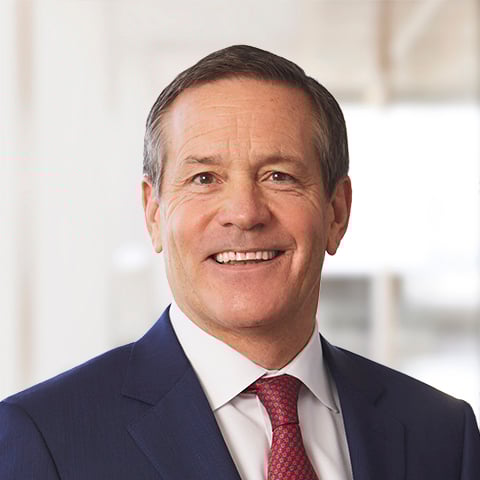
In his recent article, “Municipal Bonds and the Making of American Infrastructure,” Baird Funds’ Municipal Sector Co-Lead Duane McAllister explored how municipal bonds have long financed the infrastructure that moves goods, supports communities and drives economic growth across the country. I recently spoke with Duane about that history and how it continues to shape communities today – from canals and highways to modern data centers. As the nation approaches its 250th anniversary, it’s a timely moment to reflect on that legacy and where it may lead. Check out the conversation and full transcript below.

-
Video Transcript
John Taft: Duane, I loved your article. I love the way it highlights the public purpose and mission of municipal bonds. I personally have always thought of munis as the original “socially responsible investment vehicle.” I love the way you highlight the role they played in building our nation, financing the growth of our nation. Can you walk us through that narrative as you did in your article?
Duane McAllister: Yeah, well, thanks, John. Thanks for picking this up and having an interest in it. And I've spent my last 35+ years in the muni market, so it's something near and dear to my heart.
I just think back on the various projects that I and our team have helped finance over my career. And obviously, the concept here is that this goes back much, much further really to the origins of our country. You start thinking about the role of the infrastructure in America, starting with the canals and railroads and other forms of transportation – with airports and then the highway system and on and on – to today, where we're at and then the ongoing needs which we have.
And there's been lots of ways that that's been financed, but the municipal market has played a key role really from the very beginning. We don't think much about financing canals today, but I mean, back in the day, that was how you began to move goods from the coast into the inner parts of the country and vice versa. And you had bonds, muni bonds that played a role in that.
So I think about this, stepping back from the day-to-day, we're always looking at new deals and are we financing a new school district building or a new toll road or whatever it might be. When you step back and think about the bigger role that muni bonds have played throughout our history, and as we're coming up on this 250th anniversary, it just seemed like an appropriate time to emphasize that and I guess make people aware of that role throughout history.
John: You go in some depth into the role that productivity-enhancing infrastructure investments play in driving economic growth. Could you expand on that?
Duane: Yeah, I mean, I think in some respects, we take this for granted, that the goods that we all consume and produce just get to their end destination, whether it's via trucks on the highway or railroad cars or the ports and things that move these goods and things around the country. I happen to live in a community where we've got two railroad tracks coming through and I hear throughout the day and into the evening the movement of goods. And again, we take for granted if we didn't have that system, we wouldn't have the kind of GDP we have, the opportunity for growth and productivity.
If you don't invest in infrastructure, just think about when a bridge is closed or a highway is down to one lane from three lanes, how that congestion and bottleneck really slows things down. And so when you've got a four-lane or five-lane or eight-lane highway moving goods and services, it makes all the difference in the world. It allows growth to be more rapid than it otherwise would be and just lowers the overall cost of moving those goods around the country. So it really makes a huge difference over time.
John: Well, current-day hopes for increased productivity, of course, lie with the digital economy and AI and all of that. What do muni bonds have to do with the digital economy?
Duane: Yeah, it's a really good question. And again, we think about this in the evolution of the various things that have been financed over time, starting with the canals and the railroads and the highways and the ports and airports.
This is just the newest, latest thing. And it's obviously a very, very big thing: Huge amounts of money are being invested in these data centers. And while the muni market doesn't directly finance the data center, there are other sources of capital for that. It takes roads to move things in and out of the data center and water and electricity. So the power lines and the water and sewer lines that connect to the data centers are all important.
We see this just south of the Milwaukee area here in Mount Pleasant, Wisconsin, where they made a very significant infrastructure commitment prior to bringing in what was Foxconn initially and now Microsoft to help with that data center. Had they not done that, they wouldn't have had the ability to bring in a big provider like that, and again, thinking about the productivity, just the ability to have the services necessary to generate the productivity, the electricity, and the data is all connected to the municipal financing of that infrastructure there.
John: Not all infrastructure needs today are for shiny, new, exciting stuff. I mean, you talked about all the canals and roads and bridges that were constructed back in the day, and that's aged, and they haven't necessarily been maintained all that diligently. So there's this pent-up need for very prosaic work to bring essential infrastructure up to current standards, make it safe so we don't have bridges and roads collapsing. What role did munis play in that?
Duane: Yeah, and that's the less exciting part about this. And some people would have thought of the muni market as the boring financial market out there.
John: When I entered the muni field, they told me it was for people of “high breeding and low wattage,” to which I took some offense.
Duane: Yeah. Well, in some respects, that image hasn't changed for some in the industry. But I mean, I don't take offense at it. I laugh at it anymore because I know how essential it is. But you're right, not all of this is glamorous.
Whether it's in industrial cities, you think about the potholes and the things that really – you know it when you live in those communities, the need for the ongoing maintenance. And if you own a home, you think about just the ongoing maintenance of repairing the roof and getting it painted and all those things. That's not exciting, but it's essential for the ongoing maintenance.
And muni bonds played a very significant role. Roughly 75% of all the infrastructure spend in the country is financed in the muni bond market. So it may not be glamorous, but it's really critical. And to your point, I mean, the needs are huge. There was just a recent study done by Merritt Research where this is off balance sheet: The municipalities don't show that liability of the deferred maintenance on their balance sheet. They'll show their pension liability and they'll show their outstanding debt, but it's not captured in the financial statements. Their estimate is that for, I think they studied the largest 2,000 cities in the country, and this infrastructure deficit financing need is larger than either the pension or the outstanding debt by a magnitude of between three to four times. So it's significant.
John: I read somewhere that over the next decade, infrastructure needs in the U.S. could total $7 to $10 trillion. Now my question is: The people or the entities issuing this debt are largely state and local governments and in many cases development agencies who are already in debt. They've been issuing debt for a long time, some more than others. Where are the revenues going to come to service all this new debt, which is funding infrastructure projects?
Duane: Yeah, it's a really good question. And I think my answer is going to be basically, if you put a list together, all of the above. It's going to be some of the traditional taxing that we know about – personal income taxes, corporate taxes, property taxes, all of those things. When I hear – and I'm sympathetic to the desire to lower income taxes to boost growth and productivity – but I also put my muni bond hat on and say, we really don't have the ability in many cases to lower taxes because we have these ongoing needs.
So I think you're going to see a trend to maintaining or even raising those taxes and or user fees. But then I think you're also going to have to get creative. And you're seeing today – and it's controversial – but the taxing of wealth, that's never been done before. And obviously we're using tariff revenue that we really haven't used in a major way for many, many years to pay for things here in the U.S., and maybe some of that tariff revenue could be applied.
And then there's the shifting of “whose responsibility is it?” How much falls to the local government, how much to the state, and how much to the federal government? And so I think all of those sources are going to have to be considered. And expanding the investor base is going to be really important as well.
John: A few years ago, privatization was all the buzz, i.e., selling public assets so that (a) those sales could generate proceeds that governments could use for other things, and (b) the hope was they could be managed more efficiently in the hands of private entities. Do you see privatization as a continuing event or do you see it kind of fading away as a tool?
Duane: Yeah, it's still out there. We don't hear about it as much. It was kind of the new thing that everyone was going to turn to because it was another source of revenue and you could do these projects more efficiently. But I would say the result has been mixed. There have been some success stories where it has worked. You've gotten projects approved and built quicker, cheaper, on time, better than you would have had if it was just a fully public project.
But then there's other situations, and I think about Chicago, where they sold off the parking meters.
John: Famous one, famous example.
Duane: Famous, and very controversial. But even beyond that, I think back to the Skyway Bridge in Chicago, and a private operator came in, took that over, toll revenues weren't sufficient, ended up filing bankruptcy and restructuring.
So, a mixed bag. I think it will continue. I think in some projects, it still makes a lot of sense to do that. But it's not the panacea. It's not going to be the way out for financing these things for all municipalities.
John: Climate change: Two topics under that general heading. No. 1, one I've written about, is just the need – again, you put this in one of the infrastructure needs going forward – for what I call climate adaptation, which is helping communities, helping people in communities, that have been or will be threatened by increasingly more frequent extreme weather events. I think of floods or landslides or rising sea levels – helping them. So climate adaptation. And then secondly, disclosure of the risks to – take airports – of, you name it, any number of climate events. Maybe you could just take those two and talk about climate in the context of the muni market.
Duane: Yeah, I mean, this is a really interesting topic too. We've seen kind of the focus on this ebb and flow a little bit. Some of it's obviously tied to the political climate and the discussion there, but it's very real. And particularly the obvious examples are the coasts, where you've got the storm hurricane risks that lead to all kinds of wind damage, flooding, you name it.
It's interesting: The city of New Orleans just came with a new issue deal yesterday. And I very clearly remember what happened during Katrina hurricane and how there was some serious question about whether New Orleans was going to even exist as a city post-storm. More than 200,000 people moved out of New Orleans to Houston and many never came back. But the deal was 20 times oversubscribed yesterday. So there's still a demand for this debt.
But we're seeing – and it's not just the floods. You mentioned a number of others, wildfire risks in the West with the droughts, and that's very, very real and damaging as well. So I think there's a much greater awareness of this. Certainly investors are thinking more about it.
And the disclosure has gotten a little bit better, but not great. These municipalities, as I think about their ongoing infrastructure needs – the adaptation, raising road levels, putting up levees and walls, deforestation to minimize the wildfire risk. All of those things are part of the solution, and they need to disclose that and think about that in advance.
And you're seeing more of that. I’d say Florida in particular has done a pretty good job, I think, of thinking about that. I think because the storm risk is so obvious down there. I mean, if you look at where the hurricanes have hit the U.S., that's obviously the primary destination. But I think of wildfire risk even more today, and that's hard to predict because it can happen almost anywhere.
And so this is something that we're going to see a lot more focus on going forward, if you're a believer at all in the warming trend, I think it's going to become more and more important that we focus on that and think about the risk and how to finance that.
John: And also the risk to municipal finances. I think I read some disclosure in the Phoenix Airport about the effects of extreme heat on passenger loads and that type of thing.
One of the key roles of capital markets, which I've written about, is connecting sources of capital – asset owners, people, entities that have capital – with users of capital and mitigating the risks inherent in that. But what are the major sources of capital, the types of asset owners that municipal bonds access that other types financing vehicles don't? Where do they go? Who buys them and provides the capital, as opposed to taxable bonds or equities, that type of thing?
Duane: Yeah, I mean, the one big difference – an obvious difference just given the tax benefits, the income tax exemptions – that you bring in the retail component for –
John: Individuals.
Duane: Individuals – higher-income earners, in particular. And depending on the valuation of munis, tax-exempt munis relative to taxables, that ebbs and flows a bit.
But there's a pretty strong, consistent demand there from the individuals, the retail clients. Fortunately for that component, we've got a really strong demographic tailwind behind us. You've got obviously an aging population. Boomers control most of the wealth in the U.S. And as they age, while they might love their equity portfolio going up 20% a year, a portion of their wealth is going to be and should be in a more conservative approach. And muni bonds play a really critical role there.
So we've got a nice tailwind from the retail investor. And it's helped finance a growing supply. We could talk a bit more about supply if you want, but supply is rising. So the retail investor is really helping. But beyond that, you still have a lot of institutional involvement in the muni market. And this is more dependent on what the tax rate is and what the valuation is. But you've got banks that still have a large role in the market – less than they did years ago. Insurance companies, whether it be life insurance or property casualty insurance companies, and international investors are still involved. They love taxable munis. That issuance has come and gone a bit. But to the extent we could see more taxable issuance, you've got a huge international pool of capital there – endowments, foundations, all of that.
So retail is the core buyer of munis still. They still own roughly two-thirds or so of the outstanding debt. And as long as the tax exemption remains in place – and it's been challenged a few times, but it has survived – I think that's still going to be the core, and then valuation will drive the institutional demand around that.
John: Great. You talk in your article about the intergenerational equity of municipal bonds. What do you mean by that?
Duane: Well, I think, we're financing – so there's a new water system, let's say, going in your community. And the cost is going to be $50 million, and you issue debt to cover that. And while the current users are going to begin to pay through their revenue, the water revenue bill that they pay, somebody living in that house 10 years from now or 20 years from now or 30 years from now is going to be paying that as well. So you stretch out that.
John: And benefiting from it.
Duane: And benefiting, still benefiting from it, obviously. We all need water, sewer, roads, all the things that we use. School buildings – I mean, you think about building a new elementary school or high school and the costs obviously of construction have risen, but that school should have a 30- to 50-year lifespan, if not longer. And so many generations will be utilizing that facility.
And so I think this is where the municipal market plays a role in funding the project upfront. And the municipality borrows up front but then stretches out that payment over the life of the asset. And it's worked incredibly well.
Again, starting back with canals to railroads to all the different things that have been financed, that the muni market has played that role and you stretch it out. I think that's something that is really, really unique in some respects about the muni market.
John: It's always been a source of curiosity for me, which is that you really don't see a tax-exempt municipal bond-like market in other countries. It's somewhat, it's unique, I would say very unique in the United States. Any thoughts about why that's the case?
Duane: You know, you're right. And I haven't studied this a lot, but I have a daughter living in the UK right now and they don't have a muni market over there. And I'm surprised that you don't see more of this type of financing around the world.
It's worked so well here and it seems to, maybe it's just our independent streak and then we're going to put that burden, if you will, or part of the burden on that local municipality – that you've got a stake in the game as opposed to just depending on the federal government for everything or the state government.
John: Do you think it has something to do with our system of federalism, i.e., the notion that states are independent constitutional entities and the federal government isn't going to tax their debt? That comes down to that to some extent.
Duane: I mean, that's exactly where I was going. I think that federalism, federalist sort of mentality, and we remember back to New York City in the mid-70s when it was struggling and the headline from President Gerald Ford is basically “you're on your own” and in New York, we're not.
John: I think the Post's headline was “Ford to New York: Drop Dead.”
Duane: That's exactly right. It was less kind than what I was putting it. So yeah, I think that's part of it.
John: Thank you for the work you do in facilitating municipal bond financing. I got into the finance industry as a public finance banker because I was a reporter and I wrote about the redevelopment of an industrial city in northeastern Massachusetts. And I saw what a powerful tool the municipal bond market was in helping make that happen. And I thought, “I want to have an impact. I want to make the world a better place.” And I thought, “What better place to do that than going out and helping to raise capital for what, by definition, are public purpose projects?”
The one I've always felt best about was I was deputy mayor of St. Paul, and when the storm sewer and the sanitary sewer system there were the same system. So when it rained, the capacity of the sanitary storm system or sewer system was maxed out and effluent flowed into the Mississippi River. And we issued tens of millions of dollars of bond to separate that. And I thought, “You know, there you go, that's municipal bonds in action.”
Duane: That's exactly right. I mean, I’ve joked when people ask me what I do. I mean, the glib answer is I help make rich people richer – not the highest moral calling. But to your point, and I've really grown to appreciate this, I grew up in a family construction or excavating company. And ironically, we were doing some of these water and sewer projects and road projects when I was a little kid and teenager and into my adulthood, early adulthood.
So I saw what the projects are like, what they did, how it changed the community. And little did I know back then that I would be in a role or helping to finance those projects as I grew older. And so there is a higher moral calling to the muni bond market and what it does. And your example is exactly right. I mean, it's helped that community tremendously.
John: Duane, thank you very much for your time this morning. Thank you for your article. It's coming at a timely moment in American history, our 250th anniversary of our country, and munis have had everything to do with that at every step along the way. So thank you very much.
Duane: Well, thank you, John, for your attention on this, and I look forward to chatting more with you. Thanks very much.
The information reflected on this page represents Baird experts’ opinions as of today and is subject to change. The information provided here has not taken into consideration the investment goals or needs of any specific investor and investors should not make any investment decisions based solely on this information. Past performance is not a guarantee of future results. All investments have some level of risk, and investors have different time horizons, goals and risk tolerances, so speak to your Baird Financial Advisor before taking action. The views and opinions expressed here are those of the speaker and do not necessarily reflect the views or positions of the firm.
Investors should carefully consider investment objectives, risks, charges and expenses. This and other important information is contained in the fund prospectuses and summary prospectuses, which can be obtained from a financial professional and should be read carefully before investing.
In a rising interest rate environment, the value of fixed income securities generally declines and conversely, in a falling interest rate environment, the value of fixed income securities generally increases. High-yield securities may be subject to heightened market, interest rate or credit risk and should not be purchased solely because of the stated yield. Ratings are measured on a scale that ranges from AAA or Aaa (highest) to D or C (lowest). Investment-grade investments are those rated from highest down to BBB- or Baa3. Municipal securities investments are not appropriate for all investors, especially those taxed at lower rates.